

Service
ArkData ensures data reliability by offering IT services for disaster recovery system implemention, migration, real-time big data, and backup.

Real-time Bigdata
Real-time Bigdata
ArkData' real time bigdata intergration provides data integration capable of replication of any database and application and distribution services suitable for the user environment.Real-time bigdata intergration capability to handle large volumes of data in real time enhances overall operational efficiency and competitiveness
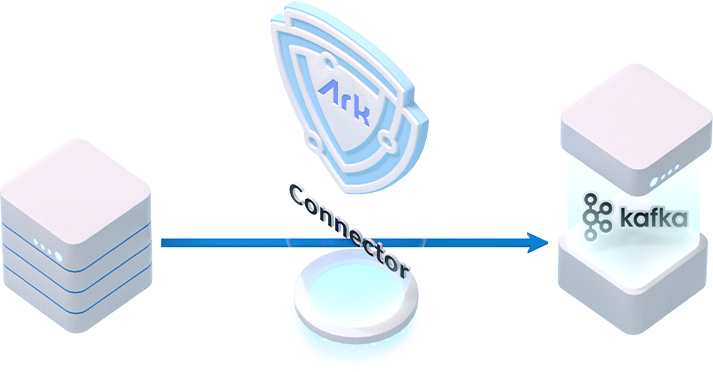
Introducing Service
-
- Improved continuity among services
- Integration among systems becomes simplified and continuity among services is enhanced
- A standard interface is secured to make it easy to implement and manage it
- Implements a high-speed, distributed, and scalable platform
-
- Simple utilization of data
- Increases in data utility by real-time streaming data processing
- Easy integration and analysis of large volumes of data to generate new business values
- Kafka platform connector enables saving costs and respond flexibly to increased data volumes and users
-
- Realization of MSA
(Micro-Service Architecture) - Kafka platform connector enables dispersing application services through fine processing of data
- Enables developing and distributing independently
- Expands the service flexibility
- Kafka platform connector, Real time bigdata intergration
- Realization of MSA
-
- Integration of heterogeneous data
- Supports various data formats
- Integrating heterogeneous data of related task properties to maintain a continuous flow of data
- Enables easily linking data between on-premise and cloud
- Kafka platform connector, Real time bigdata intergration
Why ARK
Non-unified delay link solution
- Delay linking making real-time analyses and policy decisions difficult
- Excessive management costs and manpower
- Difficult to apply for new services
Unified data collection and distribution environment
- Simplified data linking
- Improved continuity among services
- Increased flexibility through realization of MSA
How to Construct
-
01
Analyze Requirements

Analyze the requirements of a company or organization before implementing a bigdata platform and set targets. Consider factors such as the amount and type of data, processing performance, security requirements, etc., to determine the detailed direction for implementation.
-
02
Select Technology

Determine the types of technology and platform to use. Consider options like Kafka-based event streaming, cloud services, and database selection to choose the optimal platform.
-
03
Collect and Store Data

Implement connections with data sources to collect a large volume of data and decide on the method of data collection. Consider both batch processing and real-time streaming processing to efficiently collect data and choose a storage method
-
04
Process Data
Select an appropriate tool to process and analyze stored data. Utilize technologies like Apache Hadoop, Apache Spark, and machine learning libraries to process data and extract insights.
-
05
Visualize Data

Express the analysis results visually to aid in understanding the characteristics and trends of data. Employ a visualization tool or dashboard for the visualization task.


